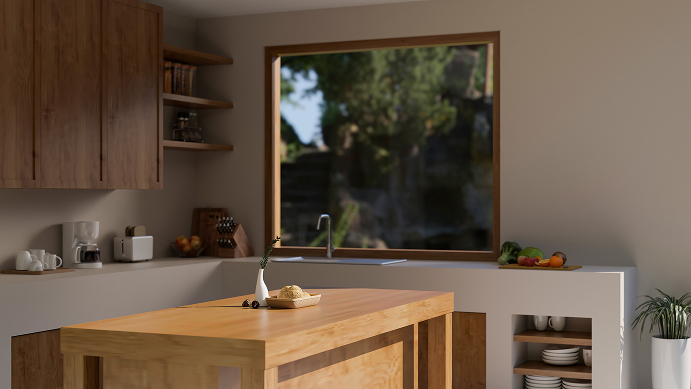
How picture windows work
Because there are no hinges, sashes, or sliders, a picture window is essentially a sealed glass unit set into an insulated frame. The thermal and acoustic performance depends on the frame material (for example, uPVC or fiberglass) and the glass package (double, triple, or even quad glazing with gas fills and coatings). When engineered correctly, this sealed design minimizes air and water leakage and creates a very stable, energy-efficient opening.
Picture windows vs. other window types
Below is a quick comparison of picture windows and several common operable window styles.
Window styles at a glance
| Feature |
Picture / Fixed Window |
Casement Window |
| Operation |
Non‑operable, fully fixed |
Hinged on side, swings outward |
| Ventilation |
None; must be paired with operable units for airflow |
Excellent directional ventilation |
| Energy efficiency |
Typically highest, thanks to airtight seal and no hardware penetrations |
High with quality seals, but more moving joints |
| Feature |
Double‑Hung Window |
Tilt‑and‑Turn Window (European) |
| Operation |
Two sashes slide vertically |
Dual mode: tilts in at top and swings in like a door |
| Ventilation |
Good but less controllable |
Very flexible, from safe tilt ventilation to full opening |
| Energy efficiency |
Moderate; more joints and potential for drafts |
Very high, with multi‑chamber frames and compression seals |
Key benefits of picture windows
Picture windows deliver three core advantages:
- Panoramic views. Slim frames and large glass panels create a clean, unobstructed opening to the outdoors, making them ideal as a design focal point.
- Abundant natural light. They are frequently used to brighten rooms with unique rooflines or large wall areas that need additional daylight, which can reduce reliance on artificial lighting.
- High energy efficiency. Being fixed, they have fewer opportunities for air leakage, and with insulated glass, Low-E coatings, and gas fills, many picture windows outperform comparable operable units in thermal performance.
In our own manufacturing, we build picture windows on the same high-performance profiles as our European tilt-and-turn systems, which allows them to share the same energy ratings and structural strength.
Limitations to consider
There are also practical trade-offs homeowners should understand:
- No natural ventilation. Because picture windows do not open, they cannot provide airflow on their own and must be combined with operable windows when ventilation is important.
- Potential for solar heat gain. Large glass areas can introduce more heat gain or loss if glazing and coatings are not chosen correctly, especially in extreme climates.
- Emergency egress. Building codes generally do not allow fixed windows to serve as required escape (egress) openings in bedrooms or basements, so they typically complement, rather than replace, operable egress windows.
When we design a package for a home, we usually combine large picture windows with operable units nearby (for example, tilt-and-turn, casement, or hopper windows) to balance aesthetics, ventilation, and code requirements.
Best locations for picture windows in a home
Picture windows are most effective where view and daylight are the priorities:
- Living rooms and great rooms. Large fixed glass panels create a “feature wall” toward a garden, patio, or landscape.
- Stairwells and two-story spaces. High, hard-to-reach openings are ideal for fixed windows, since operability there is rarely practical.
- Dining areas, offices, and reading nooks. A broad, comfortable view enhances the feeling of space and connection to the outdoors.
On our projects, we often integrate picture windows into modern façades with other European systems—such as tilt and turn windows and French windows—to maintain sightline consistency and design harmony.
Frame materials and glass options
The performance of a picture window is highly dependent on the system behind the glass:
- uPVC and fiberglass frames. Modern vinyl (uPVC) and fiberglass frames use multi-chambered designs and thermal breaks to reduce heat transfer and improve durability, often achieving U-values far below typical “economy” windows.
- Double, triple, and quad glazing. Multiple panes with argon or similar gas fills, combined with Low-E glass coatings, significantly improve insulation and help control solar gain.
In our Global70™, Global80™, and Global86™ systems, picture/fixed windows can be glazed up to triple or even quad-pane glass, achieving U-values down to about 0.14–0.18, well beyond standard ENERGY STAR requirements.
Energy efficiency and certifications
From an energy-efficiency perspective, picture windows have a structural advantage because they are sealed units with no operating hardware. Independent organizations such as the National Fenestration Rating Council (NFRC) test and rate complete window units, while the U.S. ENERGY STAR window program sets climate-specific performance targets that many modern picture windows can exceed.
Many Seemray window configurations—including fixed and picture units built on our German-engineered profiles—are rated to be 50–100% more energy efficient than the minimum ENERGY STAR requirements, thanks to tight compression seals, multi-chambered frames, and advanced glazing.
Design and sizing considerations
When helping homeowners choose picture windows, we pay attention to several design factors:
- Proportion and grid layout. A single large pane offers the cleanest view, but simulated divided lites or mullions can align with other windows and doors for a unified elevation.
- Orientation and shading. South- and west-facing picture windows may need advanced Low-E coatings, overhangs, or exterior shading to control heat gain, especially in sunny U.S. climates.
- Pairing with operable units. Flanking a central picture window with tilt-and-turn, casement, or awning windows combines ventilation with a strong visual center.
Our European systems make it possible to combine multiple fixed and operable units into a single frame, which improves sightlines and reduces the number of frame breaks that can leak energy.
Privacy, security, and comfort options
Beyond clear glass, picture windows can be customized for privacy and safety:
- Privacy and reflective glass. Specialized glass can maintain high light transmission while reflecting a large share of visible light and up to 90% of UV rays, preserving privacy and protecting interiors from fading.
- Impact-rated glass. In hurricane-prone or high-risk regions, impact-rated picture windows use laminated glass and reinforced frames to resist flying debris and forced entry.
- Soundproofing. Multi-pane glass, laminated interlayers, and heavy, reinforced frames can dramatically reduce outside noise, making large fixed windows suitable even in busy urban environments.
Seemray offers dedicated privacy windows and impact rated windows that can be specified in fixed/picture configurations to address these needs.
Cleaning and maintenance
Fixed windows are generally easier to maintain than operable windows because there are no hinges, sliders, or cranks to lubricate or replace. The primary maintenance tasks involve cleaning the glass, inspecting seals, and ensuring surrounding finishes and sealants remain intact.
Our German-engineered profiles use fusion-welded corners, steel or fiberglass reinforcement, and long-life gaskets designed to stay stable for decades, supported by robust lifetime warranties on many window lines.
Cost and long-term value
Upfront, a picture window’s cost depends mainly on its size, frame system, and glass package rather than the operability, since there is no opening hardware. While large custom units can be more expensive than standard operable windows, fixed designs usually deliver higher energy efficiency, better sound control, and lower maintenance over their lifespan, which can translate into savings on utilities and upkeep.
In high-performance European systems like ours, the price difference between a fixed and operable unit is often modest compared to the overall project, while the performance of both remains significantly above typical U.S. builder-grade windows.
Picture windows from Seemray
At Seemray, picture windows are built on the same German-engineered platforms as our flagship tilt-and-turn lines, giving homeowners the clean look of a large fixed opening with the structural strength and insulation of premium European systems. Our fixed/picture windows can be specified in uPVC, fiberglass, or wood, paired with double, triple, or quad glazing, and combined with operable units in a single, custom-designed frame.
If you are planning new construction or replacing old windows, we can help design a balanced solution that uses picture windows where views and light matter most, and advanced operable options—like tilt and turn or egress windows—where ventilation, safety, and everyday operation are critical. Share your plans and dimensions with us, and our team will recommend an energy-efficient, custom-engineered window package that showcases your view, improves comfort, and adds long-term value to your home.